

Basking Meadow Initial Dispatch
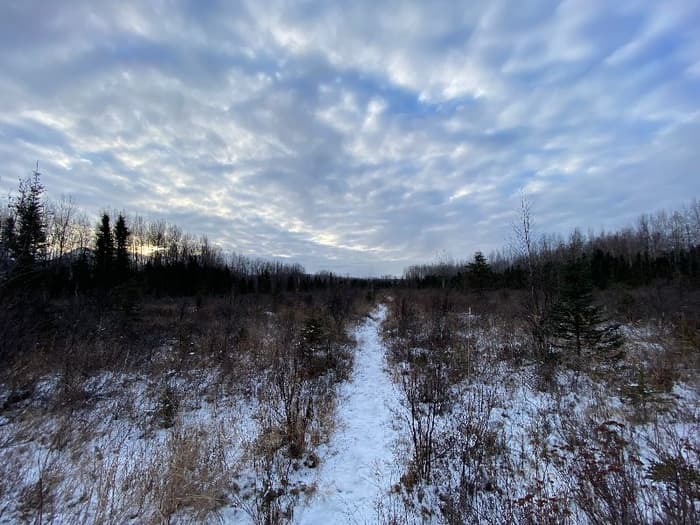
(it still looks like this outside)
Dunilggux! Cama’i!
In recent years, my primary driver in starting a blog has been to have a place to chronicle weekly progress updates, navel-gazing, and play reports about my ongoing TTRPG project Basking Meadow. So here we are. My current focus is getting a workable ashcan player’s reference squared away before beginning wider playtests. Given that I am perennially deficient in scheduling/organizing, I’m moving through things with solo play as a primary consideration. The manuscript is nearly complete for an initial presentation, and most of the work remaining is in revision, refinement, localization, and layout.
What is Basking Meadow?
In late 2022, Sean McCoy, author of Mothership, proposed a challenge for the upcoming year: write a room a day to create a megadungeon out of the whole year. I was quite taken with this idea, but knew that if I didn’t wrangle it to fit my idiosyncrasies, it would be entirely infeasible.
First I changed the framing from a megadungeon to an isolated setting; I’ve spent the majority of my life in places where terrain/flora can significantly impede travel, which makes for an easy analogy to the barriers of classical dungeons.
I gave myself grace to write minimal descriptions of my rooms if that was all I could manage. Completing the challenge with entries for every day would be satisfying in its own right, and since I intended continue to develop it past the completion of the initial challenge (and here I am three years later) having something to build off was more important than being comprehensive.
I based the landscape on an actual place that I have extensive experience with.
Throughout 2024/25 I continued writing/developing the setting and determining what kind of shape I want the thing to take. Currently I’ve settled on 3 core zines/booklets/whatevers (player/setting guide, arbiter’s guide, and flora/fauna/funga guide), a dossier of archetype/pregen characters, and adventure modules that focus on particular regions or relationships. I also have an optional metaplot that I want to include in/advance via the adventures; this and the archetype/pregen characters are A Whole Thing that I’ll talk about briefly later and longer in a different post.
Ok so what does this actually look like? Who lives there?
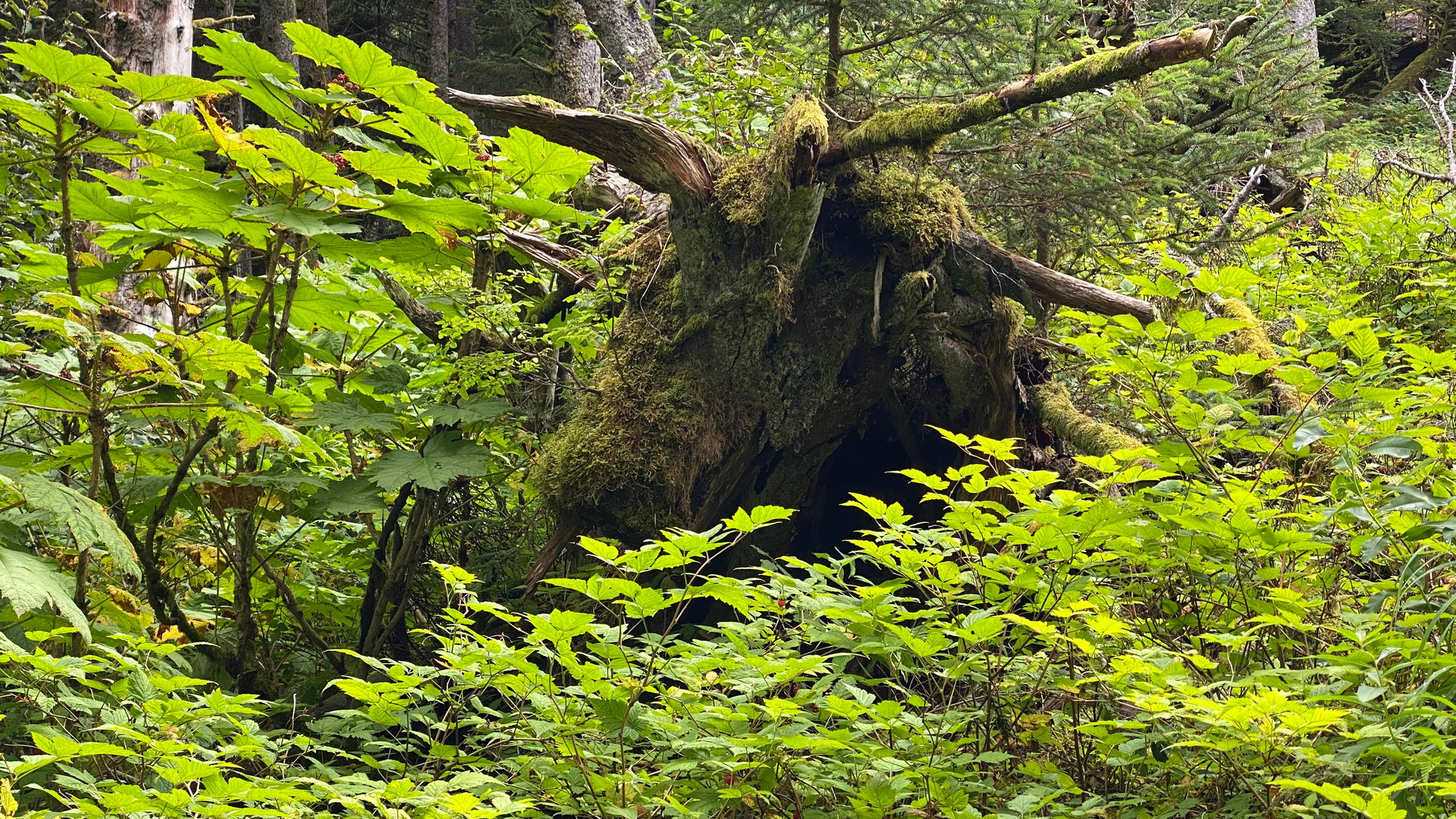
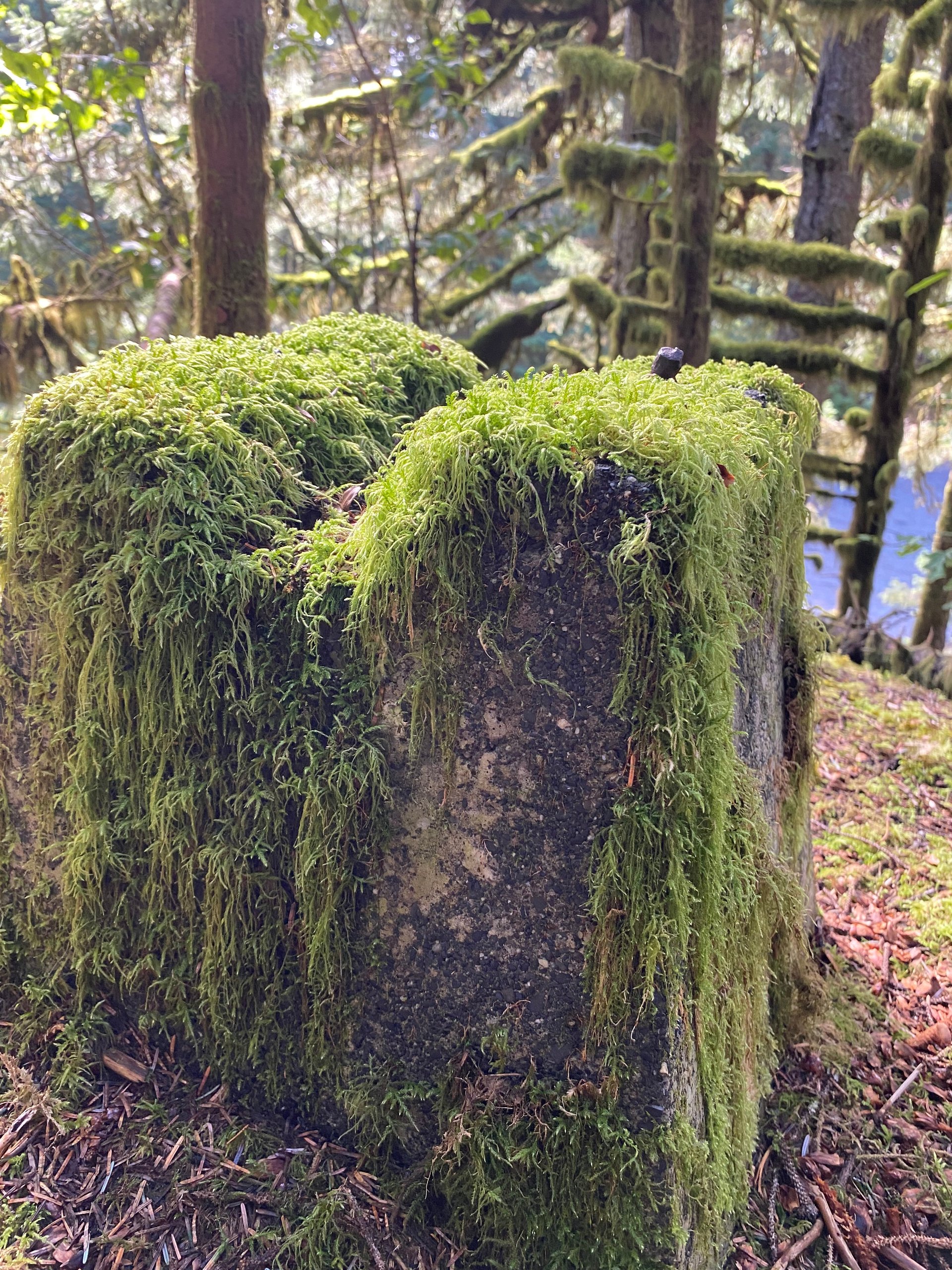
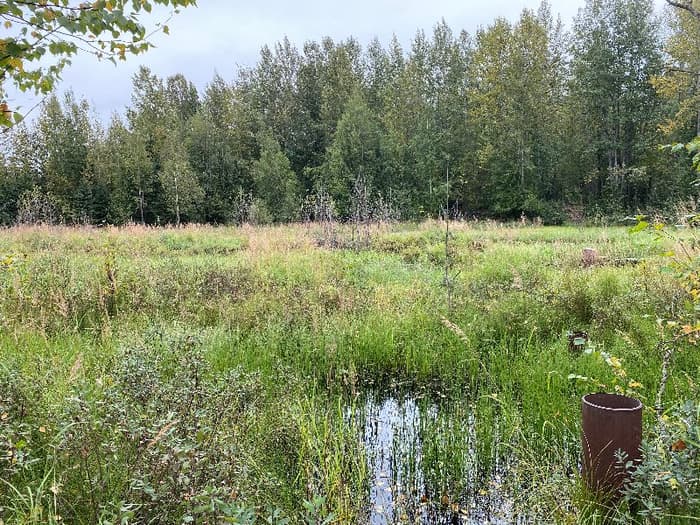
Basking Meadow is a peat bog within a mixed boreal forest similar to that of coastal south-central Alaska. Its denizens are made up of anthropomorphic woodland critters that are (largely) native to the region. The size of these denizens in relation to both each other and the world around them reflects reality with varying levels of distortion.
Some primary literary influences for Basking Meadow include Redwall, Vampire Hunter D, and Book of the New Sun. A significant tension in naming one’s influences/inspiration is in wanting to provide an effective introduction while avoiding the burden of expectation/comparison. So like, I want you to largely know what you’re in for, while also keeping my cards fairly close to my chest.
I am an open and shamelessly inveterate thief of frameworks and templates, and since Basking Meadow uses mechanical/procedural material from Cairn, Mausritter, and Ultraviolet Grasslands (each of which has a distinct authorial voice), scraping the paint and slapping up my own is of particular importance. Of additional importance is making sure that the various things that I’ve pulled in don’t duplicate/contradict each other.
Localization is another area of significant weight. As stated earlier, Basking Meadow is heavily tied to a specific region on Earth. Since this is a region that much of the world (let alone the TTRPG industry) is unfamiliar with, and owing to the fact that the setting is heavily informed by the Indigenous material culture of the region,* it behooves me to be intentional in the balancing act of cognitive load.
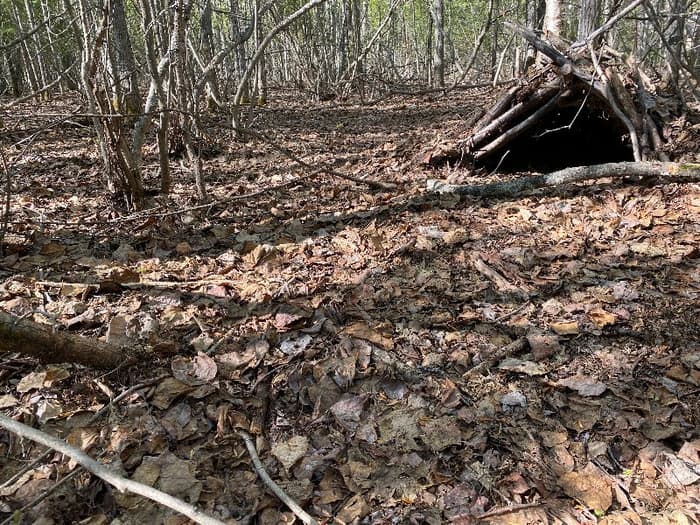
Before I close this post I want to touch on the importance of dreams to my creative process. Falling asleep is one of the most difficult things I do every day, so it behooves me to try to find whatever I can to ease the transition. Very often the obstacle is in getting my brain to relax, I’m sure you can relate. So I’ve always been fascinated by the border between sleep and waking, and tried to consciously identify how my brain/body felt as I fell asleep. And as I developed familiarity with what early sleep stages felt like, I became better able to channel that state towards deeper sleep, and eventually, under optimal conditions (lmao) begin to intentionally initate this protosleep. Of course conditions are rarely optimal so being able to guide myself to that state and ease along towards unconsciousness tends to be unreliable.
Basking Meadow provided an unanticipated boon in this regard in that it gave me an imaginary space that I could utilize in a few different ways to give my brain the particular balance of factors most conducive to sleep. I’ll expound on some of those factors and how they’ve expressed themselves in Basking Meadow, but for now the important thing is that I used my weird fantasy TTRPG setting worldbuilding to hijack my idiosyncrasies to make it easier to sleep. I recommend trying it sometime. As a result virtually every aspect of Basking Meadow has been developed in those hazy transitions, but most especially the archetype characters and metaplot.
Chin’an! Quyanaasinaq! Thank you for reading!
*Dena’ina Athabascans have lived in coastal south-central Alaska since time immemorial, and I support a fullness of their autonomy. While my relationship to and engagement with both Dena’ina and Sugpiat (the Indigenous people of Kodiak Island, where I was born and raised) is worthy of its own post, this footnote is to clarify that Basking Meadow is first and foremost a work of fiction and fantasy. The peoples and cultures of Basking Meadow should not be read as representation of Indigenous groups; that’s beyond my capability and (more importantly) Not My Business. Instead consider that environment/ecology determines natural resources which forms the basis of material culture. So to support the goal of representing this environment/ecology, it seems only reasonable to anchor this material culture as the foundation upon which mechanical scaffolding can be constructed and creative material can be filled in from there (look I didn’t come up with the building construction analogy).