
Void Cat Studios
THREE WEEKS INTO THE ASSEMBLY OF MY HOME STUDIO and I’d accepted an undeniable truth: I was the cable. The cable was me. I was a slinky coil of vinyl-wrapped copper delivering mayhem through the ether of life. Like My Life With The Thrill Kill Kult said, “I’m the electric messiah, the AC/DC god.”
Or maybe I was tired and hallucinating.
Anyway, that was a few weeks ago and now that I’m past the wiring hassles, I’m thrilled to be in my new studio. I’ve finally got a space that’s designed around how I write and record my music. It’s the first time I’ve really felt the home in home studio.
With that in mind, I thought it’d be fun to give everyone a little tour of my new digs, which I’ve dubbed Void Cat Studios in honor my two black cats, Smidge and Smudge.
My wife and I moved into a new apartment three months ago, and that provided an opportunity to set up my studio from scratch instead of forcing it into a space already occupied by a home office and other parts of my life. And while the purchase and move-in were plagued by delays, they gave me months to plan things out, buy gear, measure distances between synths and mixers and computer interfaces, and calculate just how much cable I needed. When we finally had the keys to our new home, I was ready to start hooking everything up. Never discount the value of pre-production.
Void Cat Studios is built specifically around my workflow. I can’t record full bands here, I can’t play guitars through amps and cabinets, and there’ll never be live drums. Instead, I’ve filled the studio with synths and drum machines, guitars patched directly into my DAW, a couple mics, some outboard effects, and my computer. It’s very self-contained and everything follows logical paths that make sense to me and the kind of music I create.
I know we’re all giant music nerds, so here’s a mostly complete gear list. I also included links to descriptions for anyone who wants to learn more.
SYNTHS
DRUM UNITS
GUITARS
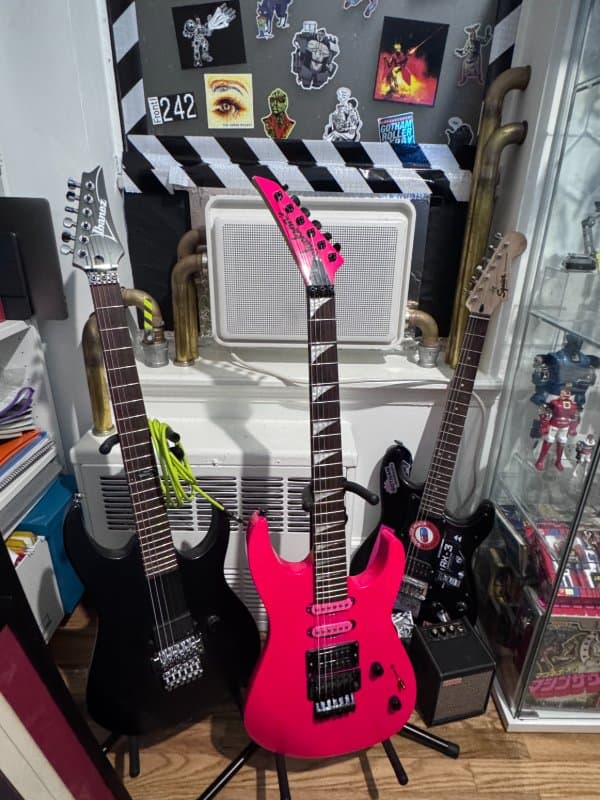
Ibanez and Jackson
MIXERS
Mackie 2404
Mackie 1604
Mackie 1202
EFFECTS
Various Boss chorus, distortion, pitch, and delay pedals
DAW
Cubase Pro
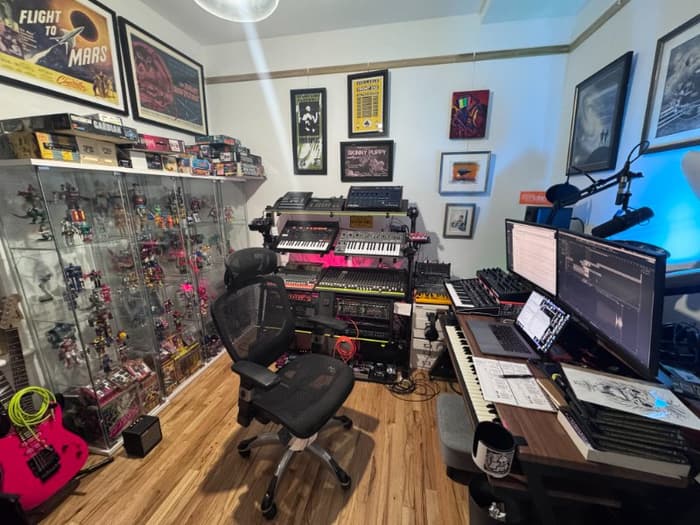
The first thing I did when I bought the apartment was measure the room I’d be using to figure out where all the gear would fit. I designed the studio around three key elements: A Wavebone Headquarter studio desk, because I liked the ergonomics, size, and look. On Stage’s three-tiered A-frame synth stand, converted to four tiers, to hold a bulk of the synths and drum machines, plus the mixers. And four Ikea Detolf Cases along the back wall to house my collection of vintage, die-cast Japanese robots and vinyl kaiju. (Priorities!) Since I had all the necessary measurements, positioning everything was pretty easy.
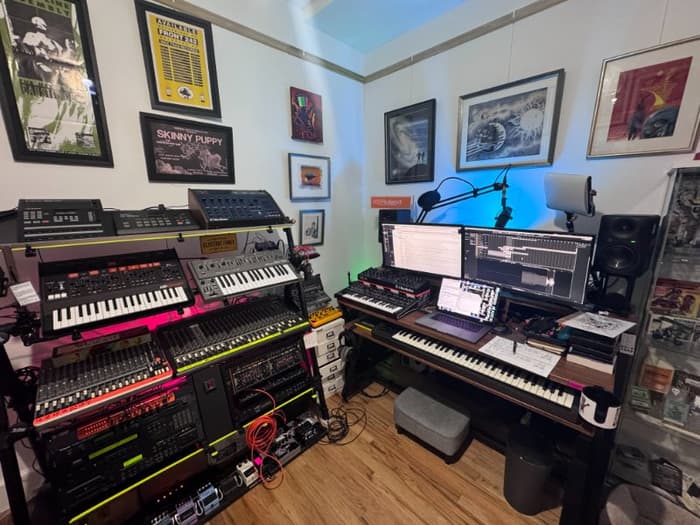
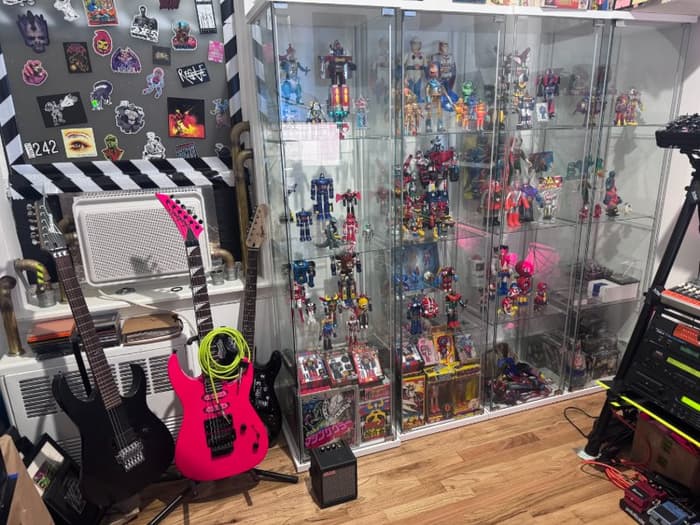
Despite my pre-planning, it still took a couple days of moving around synths, effects units, and mixers on the desk and A-frame to get everything just right.
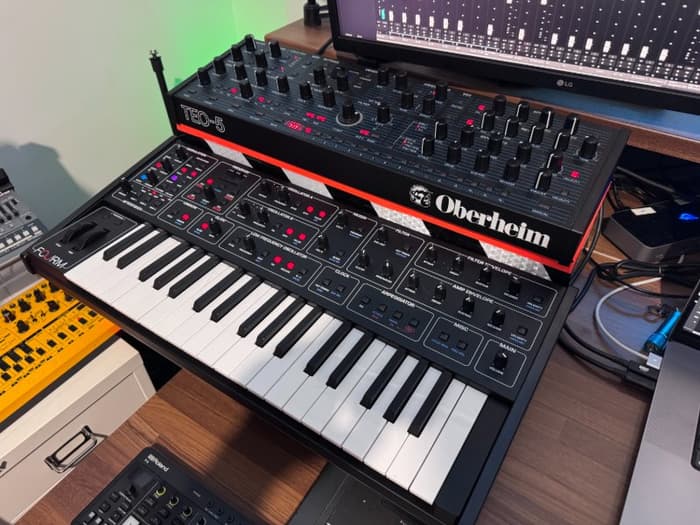
The heart of Void Cat is the Ensoniq ESQ-1, which I use as a sound source and MIDI controller. I also set up the Sequential Fourm as a sound source and controller for synths that have polyphonic aftertouch. That meant both of those had to live on my desk.
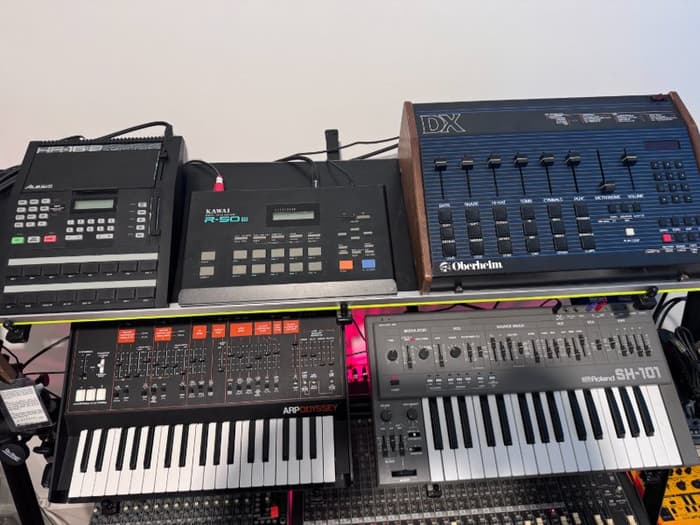
I tried to keep anything with knobs and sliders — particularly the SH-101, Odyssey, and TEO-5 — within reach so I could quickly program new patches and tweak sounds on the fly. Synths like the rack-mounted Yamaha TX-802 can’t be adjusted in real-time, so I didn’t mind placing it and similar rack units a little farther away.
I needed to have the mixers centrally located, too, since all the instruments, effects, and vocals run through them. That took some effort — 50 channels and eight busses takes up a lot of space, but I made it work. Most of my outboard effects are pedal based, so those live on the floor at the base of the A-frame.
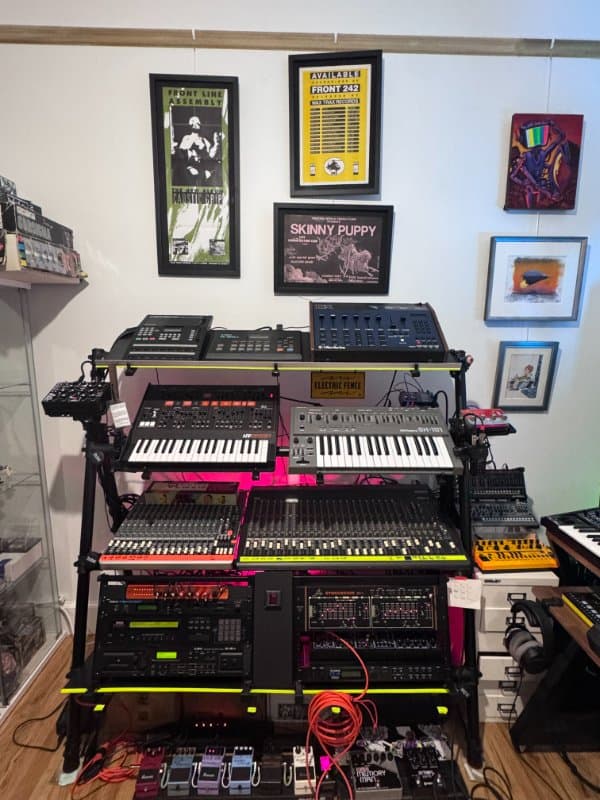
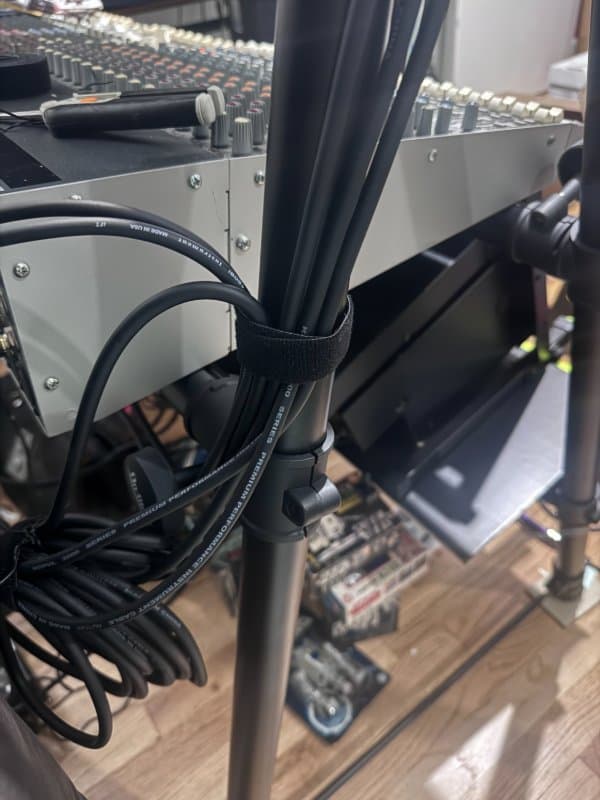
Once I decided I was happy with the layout, I moved on to wiring all the gear. I’m not gonna lie, it was a pain in the ass. Every synth has three cables — audio, MIDI, and power (and I always seem to forget that). I’d meticulously diagrammed out my cable runs before starting, and all my connectors were labeled. That helped, but it was still a huge task. I found myself running to the store over and over for more cable or to exchange cable for different lengths or different types of connectors. I’ve gone through about a zillion cable ties. But in the end, it’s a pretty well organized and wired bit of kit, and I’m glad I spent so much time on it.
Studios are always works-in-progress, but for now, here’s how it all works:
All the synths and drum machines are connected via MIDI, including the Roland SH-101, which was made before the introduction of MIDI. I use a Kenton MIDI-to-CV/gate converter to bring it online. I also lucked out with my Oberheim DX drum machine, which is a later model that includes the factory-installed MIDI. My Odyssey is a re-release made by Korg in collaboration with ARP, and thankfully they added a MIDI in. (Thanks, Korg!) As I mentioned, the ESQ-1 and Fourm double as controllers. Everything is patched through an ESI M8U EX, which is supplemented by an older MOTU Micro Lite.
The synths, guitars, and vocals run into a Mackie 2404 that I’ve owned since about 1998. Sub-outs 1 and 2 go to my audio interface, an SSL 2+ mk2, and then into my DAW, Cubase Pro. Sub-out 3 is an FX send that feeds my pedal board, which loops back into a channel strip. Sub-out 4 goes to my Alesis Bitrman multi-FX — it’s such a weird unit and I like having it isolated to do its thing. I can send any instrument into my effects before recording it to the DAW. (I like that it forces me to commit.)
The DAW also runs back into the Mackie, allowing me to monitor playback while also listening to outboard synths. (More about monitoring below.)
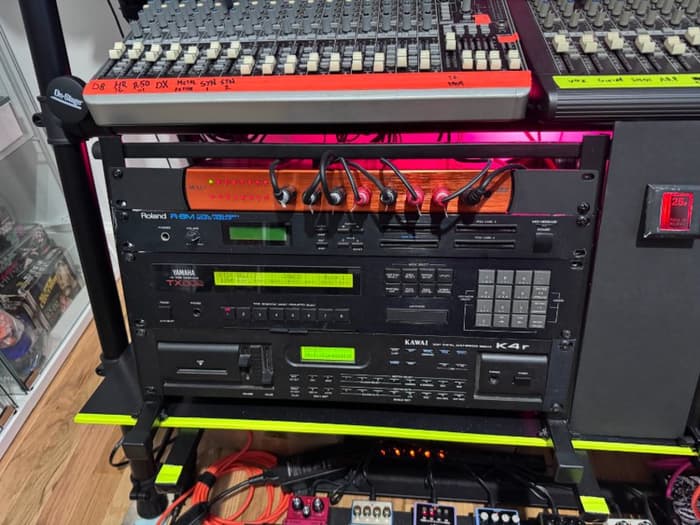
My drum machines and modules run into the Mackie 1604. Sub-out 1 feeds a channel strip on the 2404. From there, I can process drums through the FX loops or send them straight into the DAW.
I’ll admit, I worried a bit about gain staging with so many pre-amps and subs going into each other — not to mention the risk of noise generated by the drum’s signal running through two 30-year-old channel strips. (Though sometimes that kind of grit can sound super cool.) If I had the resources, I’d prefer to use a 48-channel board for everything. But this is what i’ve got, and if I’m careful I can get a nice, clean signal. So until SSL or someone wants to offer me a sponsorship, I’ll make it work. (Seriously, SSL, call me. Let’s talk.)
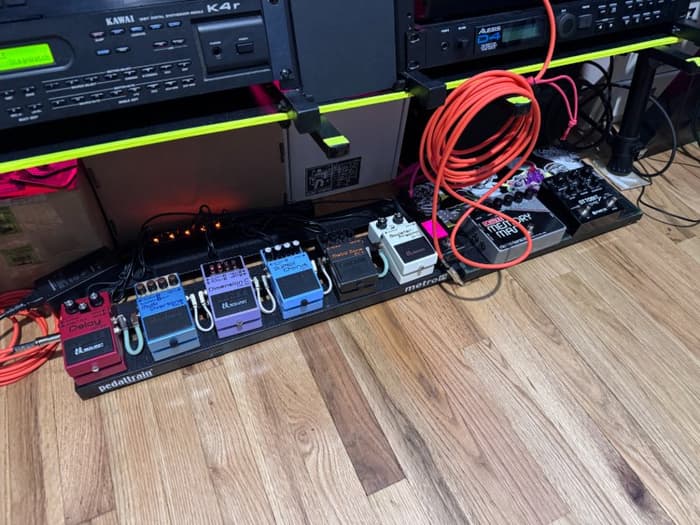
(I’m considering adding a patch bay for my effects routing. Combined with the Mackie’s pre-fader aux sends, I’ll get a cleaner signal and more flexibility. I can also use my DAW’s insert loops to process recorded audio through external gear, and a patch bay would make that eaiser. But that’s an upgrade for later.)
What I like about Void Cat is that it’s easy to send signals all over the place. Hit a button and the guitar, synths, vocals, drums, anything can go to the DAW. Hit a different button and sound gets ground up by the effects and then going into the DAW. It’s all very smooth and intuitive, and it’s the kind of system that doesn’t slow me down when I’m working on a new song. The studio encourages experimentation and happy accidents, which suits me fine.
I haven’t said much about the studio as a mixing environment, and that’s because it sucks and it’s why I don’t mix with monitors. There’s nothing about this room that’s suitable for critical listening, so even though I’ve got a pair of Mackie monitors, they’re just for playing songs for my wife and friends. Instead, like so many others, I mix through headphones using the VSX plugin. It’s fantastic, and now that I can accurately hear what’s actually happening in all my mixes, all my songs sound so much better.
Working through headphones has lead to a weird studio quirk. I don’t like committing a synth to tape until I’ve lived with its patch for a while. VSX is a DAW-based plugin, so it’s useless for monitoring any instrument outside the computer. So until everything is recorded, I monitor through my mixer using a pair of Beyerdynamic DT900 Pro open-back headphones. Since Cubase runs back into the Mackie, too, I’m able to hear everything as I work. Once I’ve finally tracked all my instruments and it’s time to mix the song, I switch to the VSX cans, which are plugged directly into the SSL interface’s headphone jack.
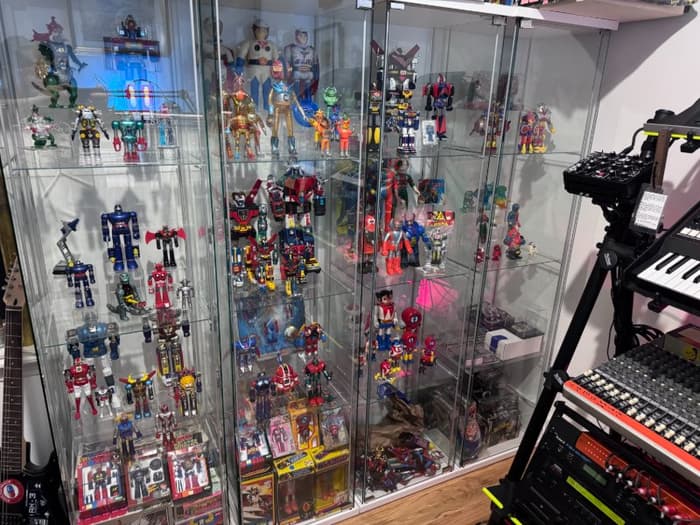
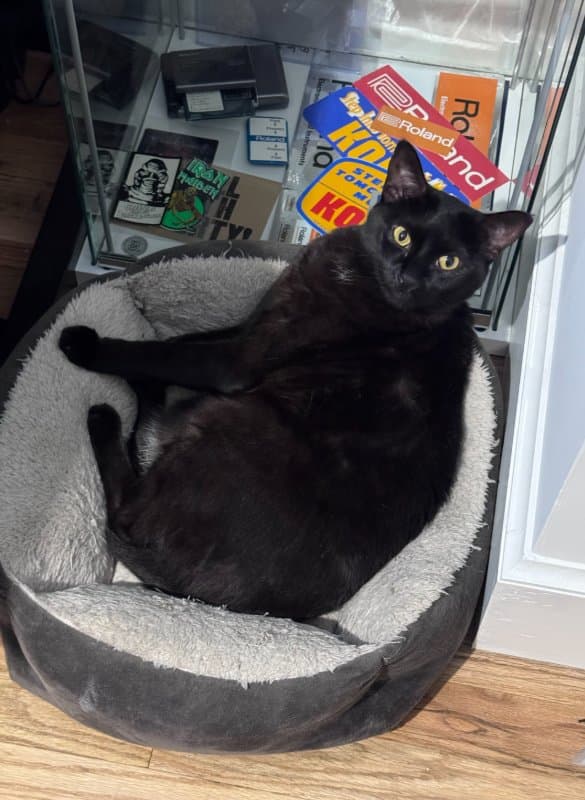
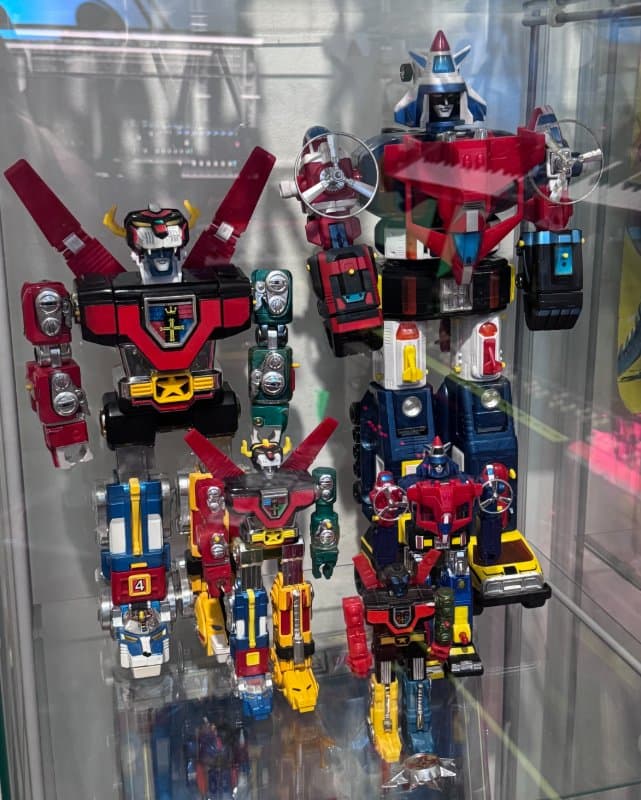
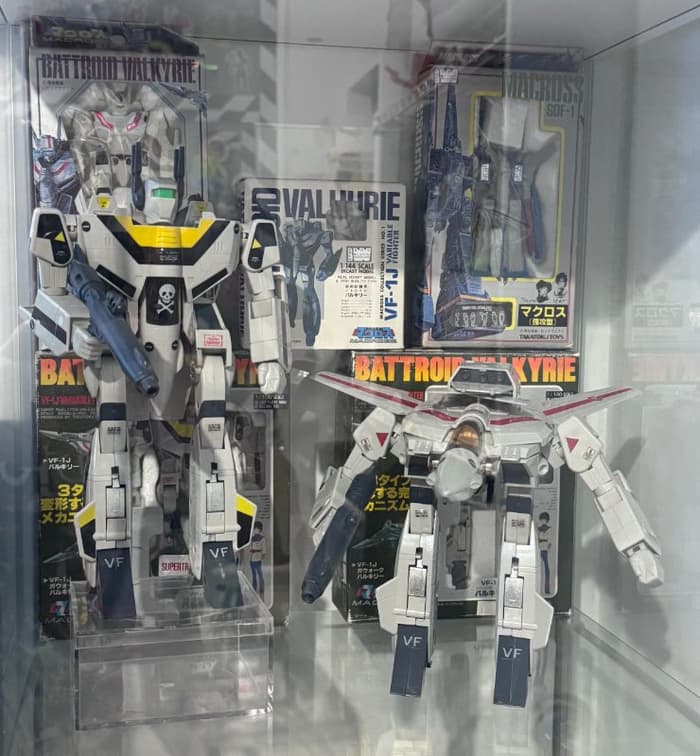
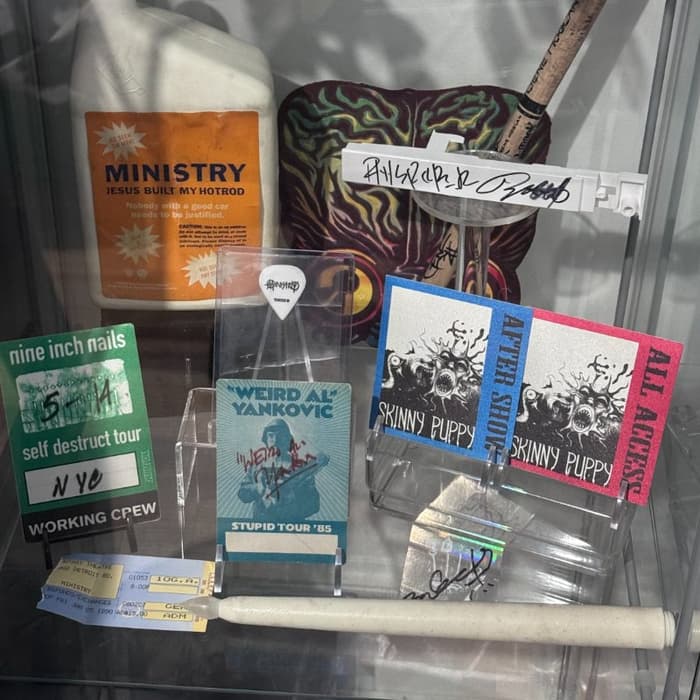
That’s pretty much the technical side of things. But that wasn’t the end of the Void Cat build. I spend a lot of time in my studio, and it’s important that the room’s an inspiring and comfortable place to work. Once I had my gear set up, I turned my attention to creating a vibe. That meant setting up my collection of toy robots and kaiju. I also hung a lot of original science fiction art — pieces published in pulp magazines, on book covers, etc. I added some framed vintage posters to the walls, as well as flyers and other memorabilia that have inspired me over the years. Colored accent lights add to the mood, and of course I threw a cat bed into a corner for Smidge and Smudge. (Though Smidge would rather sit in my chair. Or on my laptop. Or on a synth. Or in front of my computer monitor…)
So there you go. It’s taken a long time to get here, but with Void Cat I’ve finally got the kind of home studio I’ve dreamed of having since I first started making industrial music more than 30 years ago. Time to fuck shit up.