
image
Artwork by
Stefan Thanneur

Supercontinent

Thecodontion

June 26th, 2020
11 tracks
44:52
Supercontinent
Supercontinent
Gyrosia
0:00
2:08
Gyrosia
Thecodontion
Instant abiogenesis when Gyrosia formed microbes near hydrotermal vents geochemically active environment rounded tubular cells on a fossilized beach
2:08
Vaalbara
Thecodontion
Lithostigraphic structural arrays reveal the supercontinent's existence often disputed a three fold stratigraphic similarity leads to reconstructions of ancient latitudes extensional faults during felsic volcanism both coeval with impact layers paleomagnetic data showing igneous complexes of what could have once been part of the same a pattern found in Precambrian cover sequences granite greenstone belts show evidence of meteorite impacts into spherules of glass akin to lunar soil carbon chondrules traced in the membrane organelles of eukaryotes coded in the blue algae of Cyanophyta molecular clocks and fossil photosynthesis biomarkers have found their way through rocks to discover the missing Archaean link between twin transcontinental basins two cratons drifting apart from each other across four billion years wide oceans
4:12
Ur
Thecodontion
Protolithic shields once close together Near each other until the Mesozoic break-up Younger continental assemblage Three of a kind now far apart Up to the Siderian era range When Ur joins Nena and Atlantica On early Earth's archaic tectonics Three worlds collide The Zimgarn hypothesis surfaces Extensive carbonate platforms develop Differing magmatic signatures Primordial magnetism affected Expanding continuing stabilisation Intracontinental within the southern margin Ur, the longest-lived landmass Yet it remains hopelessly obscure
6:32
Kenorland
Thecodontion
Kenorland located at lower latitudes until tectonic magma plume rifting The Baltic Shield over the equator joined to the Canadian forming an unity its nexus near the Fennoscandian shield transition point to two-layer core findings of earlier continents indicate contradicting adjustment theories during the Siderian and Rhyacian periods protracted fissures manifested by mafic dikes and sedimentary basins bimodal deep convection splitting common no longer a supercontinent, a divide at two-point-fortyfive Gya, a breakup speculation based on the margin spatial arrangements of Laurentia drifting assemblies flow together toward the subsequent amalgamation southwest and northwest portions of the Canadian Shield at opposite ends temperatures plummeting abyssal banded iron formations indicating anoxia nevertheless, photosynthesis still unbound stabilizing climates new levels
4:23
Lerova
Thecodontion
Surface water moving east to west warming up from the sunlight vespertine edge warmer than austral countless seasons of monsoons
2:23
Nuna
Thecodontion
Proto-cratons containing the Earth's continental blocks welded, amalgamated sutured with orogens twelve-nine-hundred kilometers along the north-south axis four-eight-hundred kilometers along the east-west axis mountain range formations South America was rotated edges extending into the brinks of Scandinavia outgrowth via accretion key continental margins forming a magmatic belt along southern limits anorogenic activity forming anorthosite suits marked by the emplacement of igneous northern hemisphere continental configuration based on radiating dike swarms also known as Columbia Nuna, completed by global collisions
6:01
Rodinia
Thecodontion
Her womb was barren Uncolonized dry land No inhabitants on her interior rings Ultraviolet light hindering life Rainfalls increase volcanic rocks weather Low threshold triggers extreme glaciation Tectonic activity nourishing marine environment Neoproterozoic orogeny unknown longitude Rifts spread to warmer litosphere Ocean floors come up Eustatic water levels rise Parallel shallower seas
3:52
Tethys
Thecodontion
Continuous belt circling around the Earth slightly above the Equator currents running differently ocean floor buckling under
1:58
Laurasia-Gondwana
Thecodontion
Zero parallel location during the Cambrian drifts assemble and break her up Silurian volcanism reforming Laurasia they are coiled close together Iapetus rafts terranes to be added back Neo-Tethys pushes them across the Equator microcontinents and blocks amalgamate unknown if they originated on her shores lycopods invade and dominate the tropics terrestrial pteridophytes colonize rapidly Baragwanathia flora occurs in two strata replaced by Archaeopteris and giant moss Rheic closure, ocean currents reroute Gondwana rotates clockwise, Australia shifts south to more temperate coordinates coal-forming forests form from ice melting now petrified voltziaelan conifers evolve extinct glossopterids reach peak diversity plant-vertebrate-insect ecosystem results hexapods codevelop, therapsids arrive
3:06
Pangaea
Thecodontion
Plate tectonics paramount in the formation of later landmasses and habitats lifeforms adapt to chasms and earthquakes shaping the various stages of Pangaea Traversodonts thrived where others struggled spore plants replaced by gymnosperms few marine animals known to exist ammonites, brachiopods, massive reefs Lystrosaurus, Cynognathus and ferns fossils Mesosaurus found in coastal regions distribution ranging from polar to equator glacial deposits of the same age and structure drastic climate change after reconfiguration warm tropical air and water transfer halted atmospheric circumpolar currents Antarctica cools down to a frigid state deterioration of the northern section contributed to the Permian Extinction beetles and cicadas wiped away acid oceans dissolving benthic species
7:36
Panthalassa
Thecodontion
Hemisphere-sized ocean gigantic single-celled organisms trade winds create westward flows four currents of subtropical gyre
2:41

[Text by I, Voidhanger Records]

After releasing a demo ("Thecodontia", 2018) and an EP ("Jurassic", 2019), Italy's bass-driven black/death metal prehistoric beast THECODONTION is back with its first full length album, "Supercontinent". Thus far, the band's material has been uncompromisingly fast-paced and length-wise short, featuring their signature distorted double bass attacks and blistering bass solos. With "Supercontinent" THECODONTION move towards a more atmospheric and intricate direction, with tribalistic drumming, slower and lengthier riffing, and wailing reverb-drenched leads, all played on bass except for a baritone guitar guest solo on "Laurasia-Gondwana". Their blast-beating fury is nevertheless always present, this time around with a lot more variety in the riffing department. There are also four mostly non-metal instrumental segments in the forms of intro, interludes and outro, in which THECODONTION further expand their sonic palette, with bass ambience explorations and atmospheric rock leanings.
As the album title suggests, "Supercontinent" is a conceptual voyage through various stages of ancient Earth's continental drift phase, from the earliest known supercontinent ("Vaalbara") to the most recent one ("Pangaea"). Extensive researches with an almost scientific approach have been made for the lyrical department; and yet there is a strong pursuit for a certain vivid imagery, with poetic descriptions of ancient lifeforms populating the planet during the various geological eras, and cataclysmic events leading to the break up and collision of landmasses. The four instrumental non-metal songs feature short poems about superoceans: enormous bodies of water which surrounded these continental assemblies.

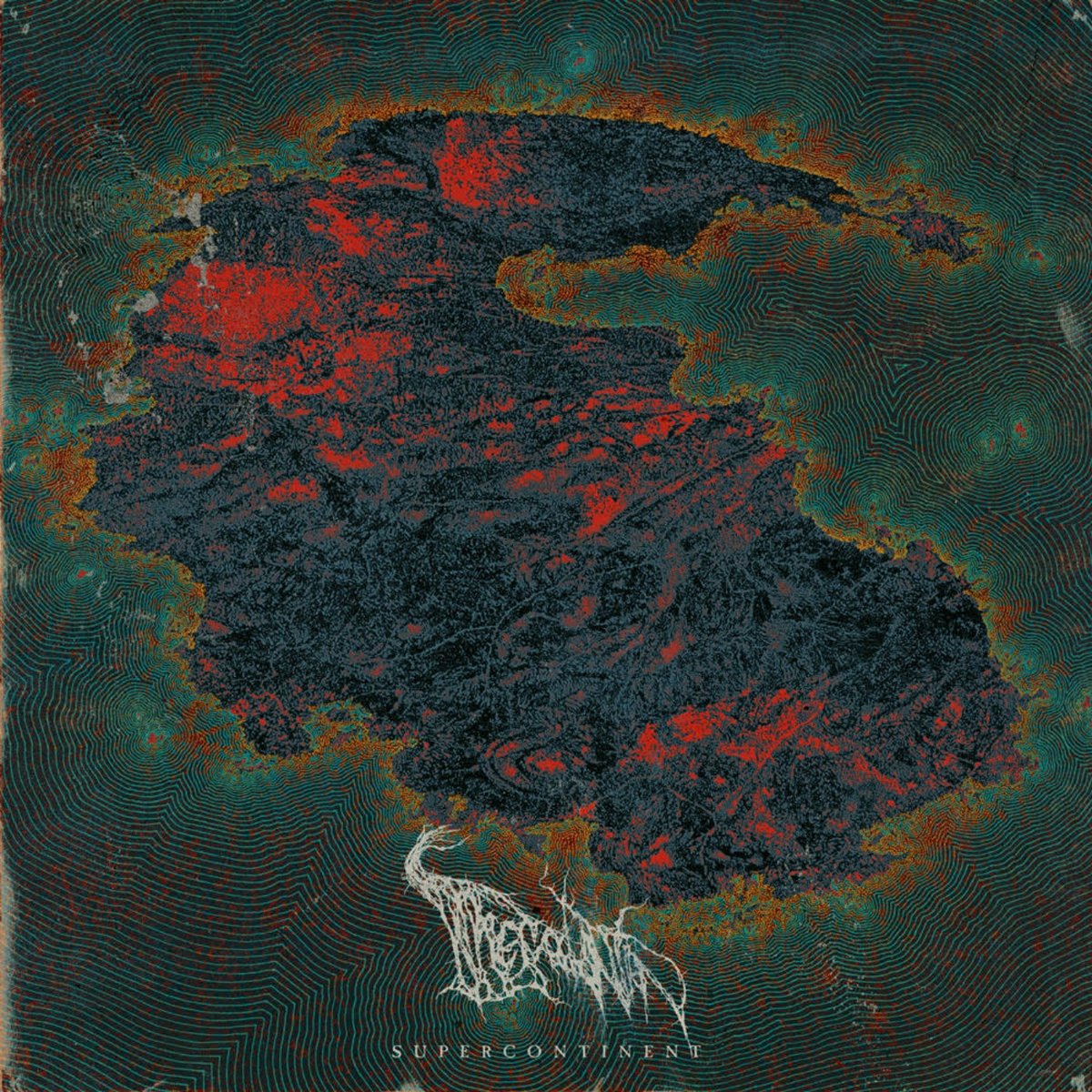
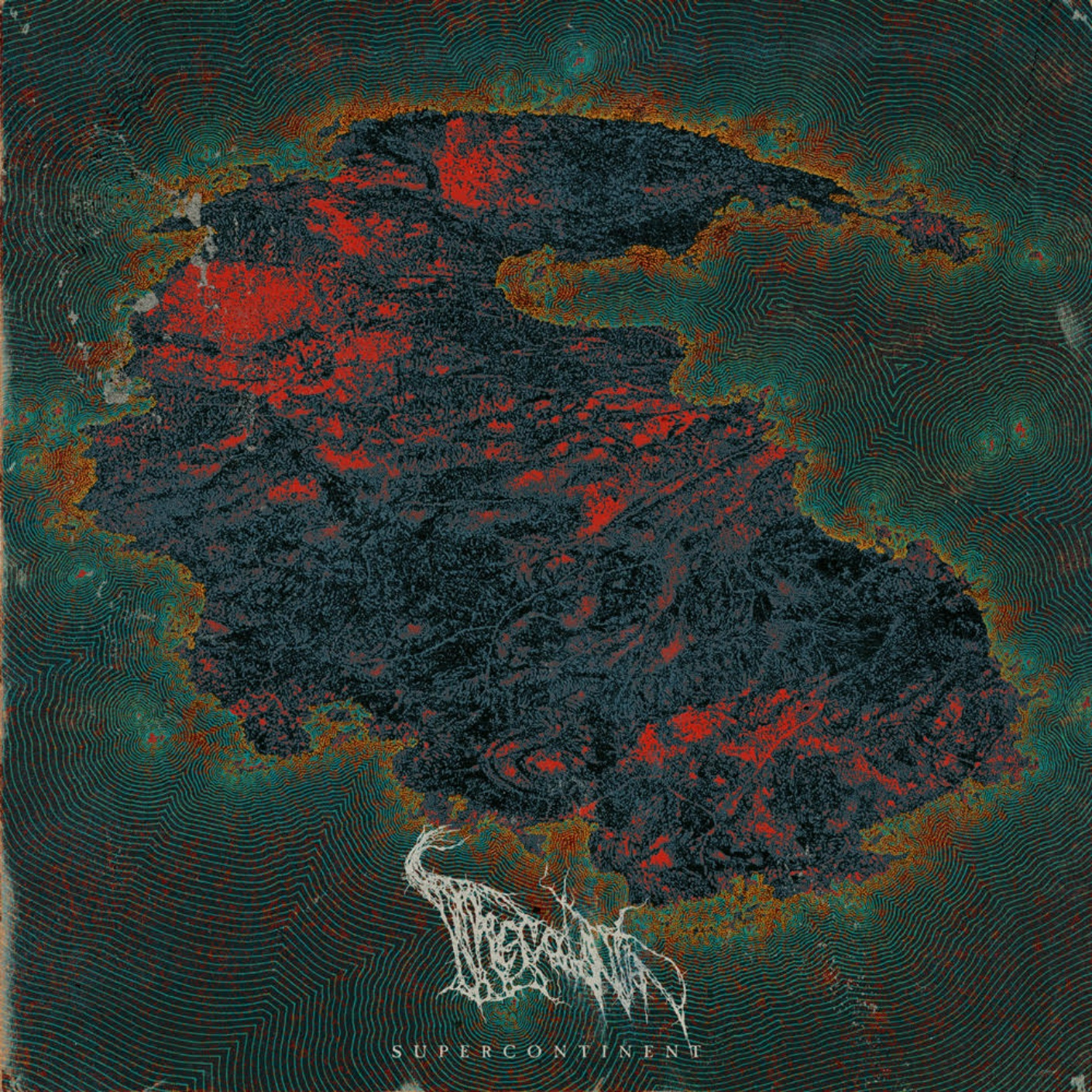
On the visual front, the concept is perfectly embodied by the phenomenal artwork of Stefan Thanneur (CHAOS ECHOES), with a colourful representation of the final supercontinental stage and climax of the record: Pangaea surrounded by the Panthalassa Ocean.
THECODONTION's "Supercontinent" is an atmospheric death metal sonic journey and another step for the ever-developing and evolving sound of this archaic entity.

12" LP edition out via Repose Records (UK)
Digipak CD edition out via I, Voidhanger Records (IT)

Credits

G.E.F. - vocals, songwriting
G.D. - bass, lyrics, arrangements

Session/guest musicians:

V.P. - drums
J.G.P. - guitar (baritone) on "Laurasia-Gondwana"
R.C. - vocals (additional) on "Pangaea"
Skaðvaldur - vocals on "Ur"


Cover art, design & layout by Stefan Thanneur


Recorded at Snakes Studio in Rome, Italy by Guglielmo Nodari.
Mixed and mastered at Necromorbus Studio in Stockholm, Sweden by Marco Salluzzo.